
ReciclaAuto 2026: New Paths for Automotive Recycling
What happens to a vehicle when it reaches the end of its useful life? This was one of the key questions at the heart of the discussions at ReciclaAuto 2026, a pioneering event for the automotive dismantling and recycling sector in Brazil.
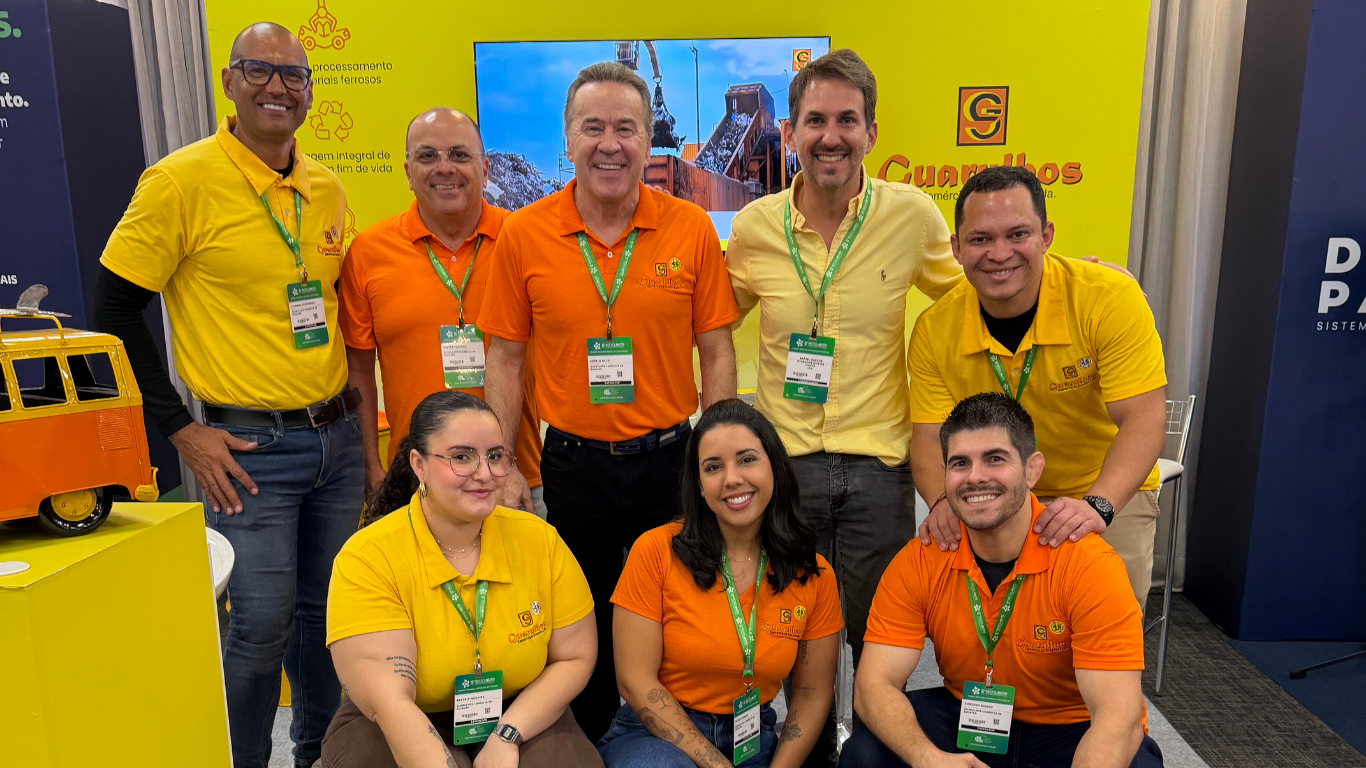
Over two days, we took part in the event, which brought together professionals, companies, and experts from across the country to discuss automotive recycling, the circular economy, technology, innovation, and new directions for the automotive value chain.
For us, participating in ReciclaAuto was an opportunity to strengthen connections, exchange experiences, and share our perspective on the role of recycling in building a more circular automotive value chain.
Our Director Rafael Barros Participated in a Panel on the Future of Automotive Recycling
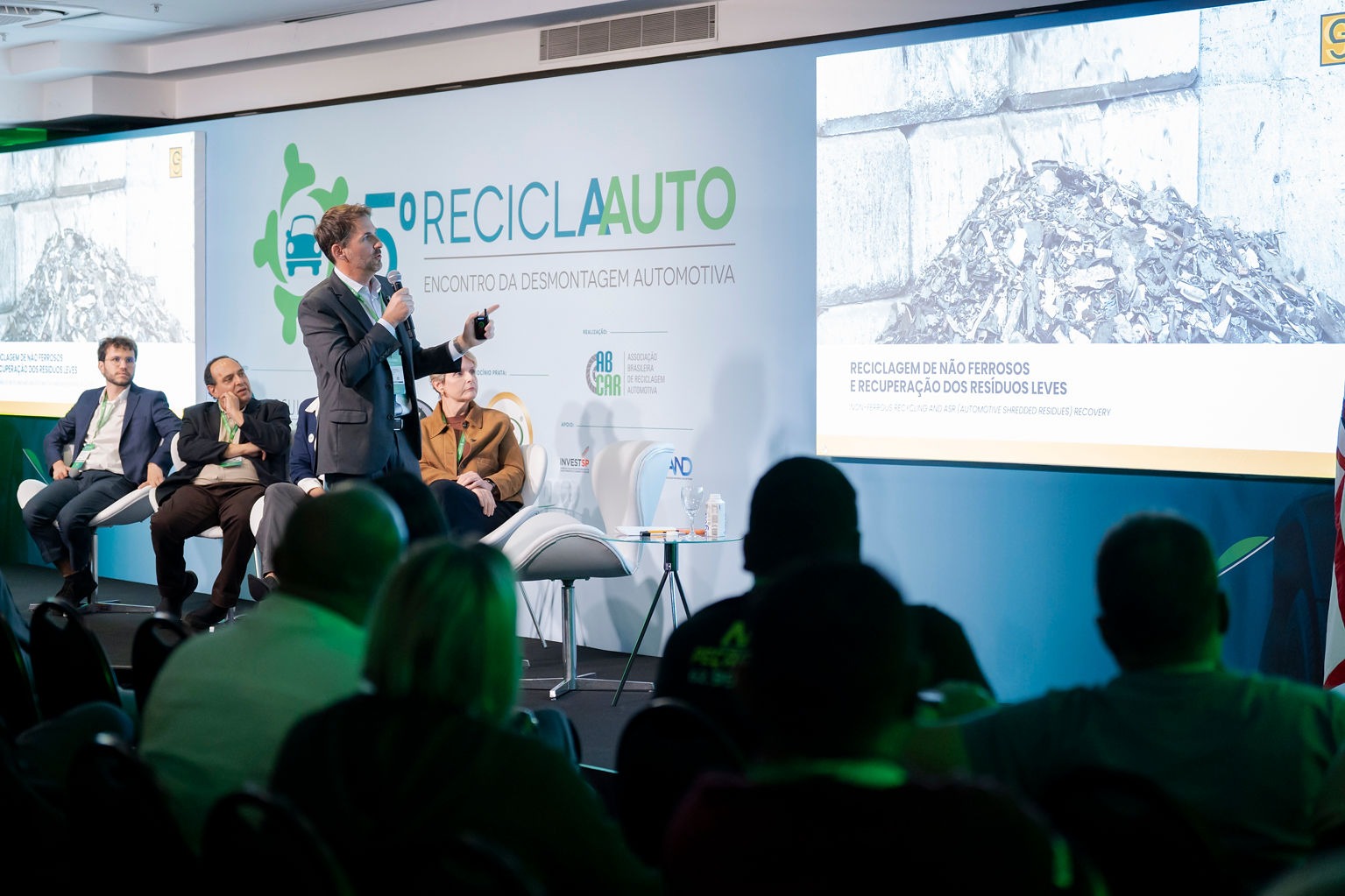
One of the highlights of our participation was our director Rafael Barros’ presence on a panel discussing the future of automotive recycling.
During his presentation, Rafael addressed the relationship between MOVER, automotive dismantling, and recycling, highlighting the importance of considering end-of-life management as part of the vehicle’s life cycle.
In this process, dismantling and recycling play complementary roles. While dismantlers recover parts and components that can still be reused, recyclers focus on recovering the materials that make up the vehicle.
At Guarulhos, this work involves processes such as depollution, shredding, separation, and material recovery, allowing us to recover ferrous metals, non-ferrous metals, plastics, and other fractions that can return to industry as raw materials.
From End of Life to a New Cycle
An end-of-life vehicle still contains materials that were once extracted from nature, processed by industry, and used for many years. Recovering these materials means keeping them in circulation and beginning a new cycle.
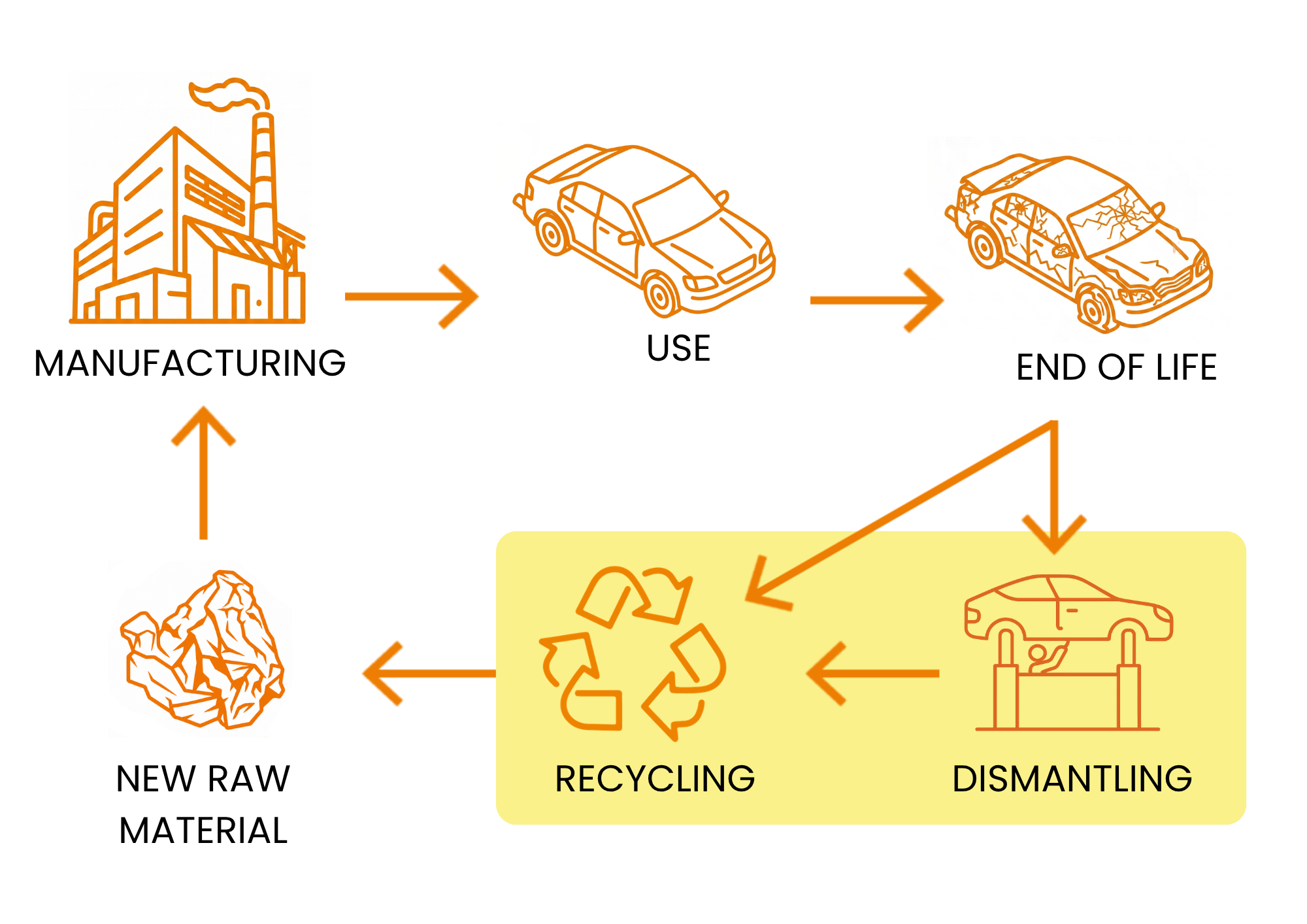
This is the logic of the circular economy applied to automotive recycling and one of the key reflections we brought to ReciclaAuto 2026.
An end-of-life vehicle still contains materials that have already been extracted from nature and transformed by industry. This is where urban mining comes in: we recover resources that are already within our cities and transform them back into raw materials for industry. In this way, recycling helps reduce the need for new resource extraction, keeping materials in circulation and strengthening the circular economy.